

NexPureD3: Evaluating New Entrants With Confidence
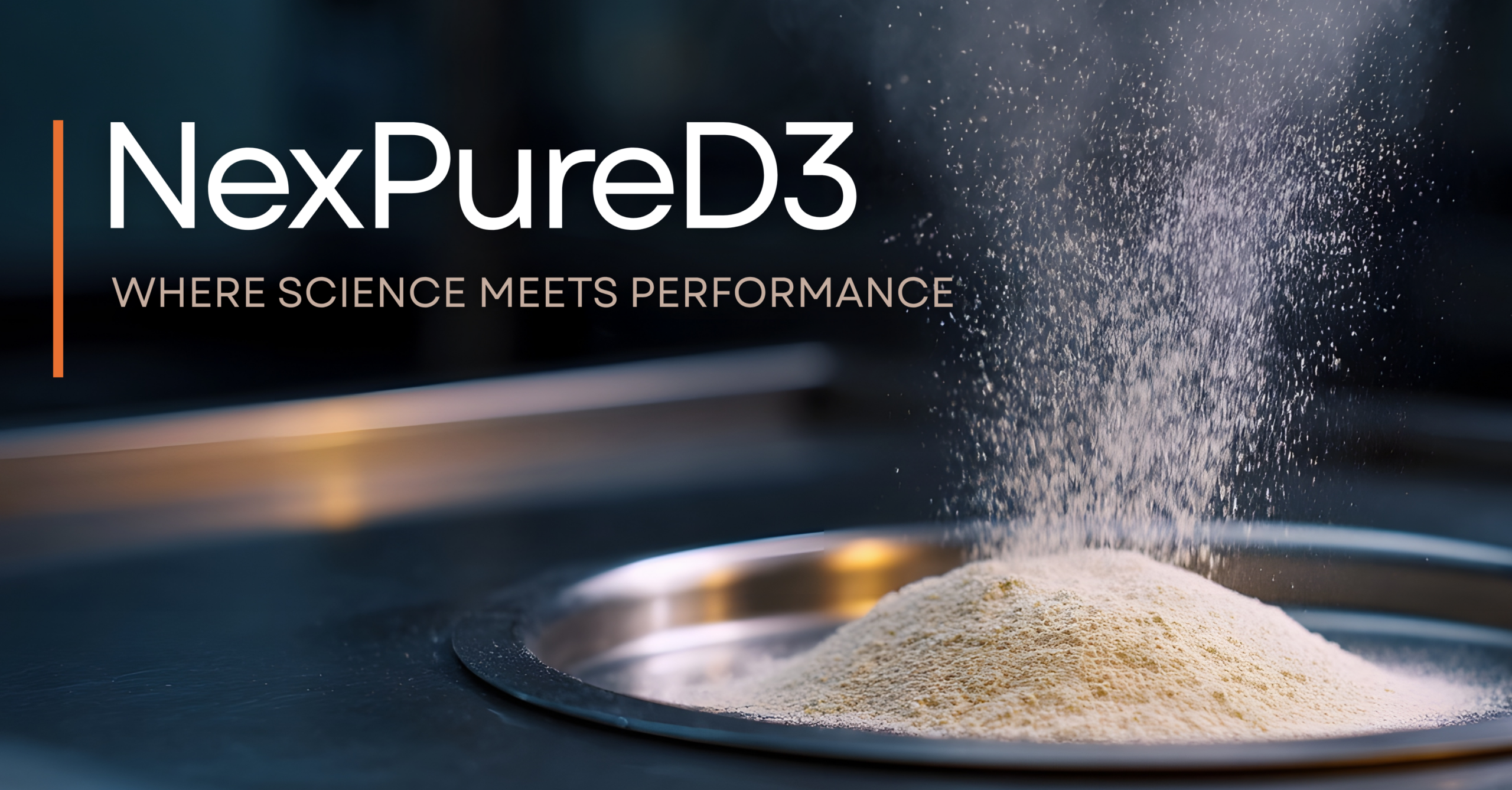
How to Evaluate New Entrants Without Compromising Confidence
Over the past year, the 25-hydroxyvitamin D3 (25-OH D3) space has shifted, and the prevailing winds of commoditization have begun to blow. What was once a tightly controlled category with limited global suppliers now includes numerous new entrants bolstering comparable claims.
Competition is healthy. It drives innovation and accessibility. And while we might champion the fact that with growing competition, defaulting to price as the key differentiator could be a potentially dangerous strategy, because 25-OHD3 is not just another additive. It is a biologically active molecule directly influencing calcium metabolism, skeletal development, immune modulation, and reproductive performance.
When something operates at that level of physiology, evaluation deserves more than a line-item price comparison.
The key question is…
“How do we determine whether this version is safe, suitable and reliable for our production system?”
Below are four pillars everyone should consider when evaluating alternatives.
1. Manufacturing Transparency & True Collaboration
Manufacturing route, purification steps, intermediate handling, and drying method all matter. But beyond understanding the process on paper, the critical differentiator is oversight.
· Does the supplier maintain a collaborative relationship with the manufacturing site?
· Are regular on-site audits conducted?
· Is there a clear understanding of critical control points?
· Is the process actively monitored — or simply documented?
Transactional supply creates blind spots, while a collaborative and proactive approach builds predictability. When a supplier deeply understands and audits production, deviations can be prevented.
2. Purity, Impurity Profiling & Verification
With an active metabolite like 25-OHD3, safety must extend beyond potency. Evaluation should include confirmation that biologically active derivatives such as calcitriol remain tightly controlled, alongside screening for antibiotic residues, elimination of animal by-products, and clearly defined impurity thresholds supported by validated analytical methods.
A credible supplier should be able to clearly articulate:
• Which impurities are monitored
• What acceptable thresholds are established
• How frequently these parameters are verified
Independent verification strengthens confidence. Relying solely on offshore certificates is not the same as validating quality locally. Robust programs incorporate laboratory confirmation, documented control checkpoints, and full traceability throughout the supply chain.
Local validation strengthens internal QA programs, protects reputation, and shifts the conversation beyond marketing claims.
3. Independent, Domestic Validation
Performance statements require meaningful validation. When evaluating alternatives, consider:
· Has the product been compared head-to-head, in production systems against the industry gold standard?
· Were trials conducted in accredited, domestic research facilities?
· Did evaluation extend beyond ADG and FCR?
· Serum 25-OH D3 levels
· Calcium and phosphorus markers
· Bone morphology and mineral composition
The most credible suppliers are willing to fund transparent, side-by-side research — and share the data, while committing to ongoing validation across species and dose ranges, not just a single comparison study.
4. Production Method & Product Form Matter
How 25-OHD3 is produced influences both stability and operational ease.
Questions to ask:
· What is the manufacturing process used to produce 25-OH D3? It produced using safe yeast fermentation?
· What is quality and hygiene standard used? Is it manufactured in a pharma-grade facility?
· What is the drying methodology and what is the consistency? Is it freeze-dried for uniformity and stability?
· How does the product behave in premix and feed manufacturing environments?
Physical consistency affects blendability, segregation risk, and homogeneity.
As more alternatives enter the 25-OHD3 market, there is a natural temptation to view the molecule as interchangeable. Still, the lowest-cost option can quickly become the highest risk if impurity controls, manufacturing oversight, or validation depth are insufficient.
The most trustworthy suppliers welcome scrutiny and procurement teams should always ask:
“Does it meet our safety, validation and operational confidence standards?”
A Note on NexPureD3
At Nexus, this framework is exactly how we approached the development of NexPureD3.
We built collaborative oversight into manufacturing from the beginning — including routine site audits and defined critical control points. The product is produced via safe yeast
fermentation in a pharma-grade facility and freeze-dried for consistency and handling stability.
We have conducted several domestic trials, across multiple species, at accredited institutions such as Unversity of Georgia and Purdue University, comparing NexPureD3 directly to the established industry standard with a commitment to evaluating not just feed performance, but blood markers and bone morphology. And this commitment extends to further species-specific and dose-response research.
Confidence is supported by local laboratory verification and defined impurity thresholds, reinforcing safety and consistency.
As this category continues to expand, our belief is simple:
25-OHD3 should never be evaluated as a commodity. NexPureD3 is purity that performs…confidently
Connect with us to learn more

Welcome to SAM Nutrition, where excellence in animal nutrition is our foremost commitment. As a trusted leader in the industry, we offer a comprehensive range of premium feed additives, ingredients, and solutions that empower animal nutritionists, buyers, and sourcing agents to achieve optimal health, performance, and well-being for the animals under their care. We also service and support distributors and manufacturers of human and plant nutrition, dyes, and leather products.
SAM Nutrition
7760 France Avenue South Suite #1330
Bloomington, MN 55435
office: +1 (952) 974-9174
fax: +1 (952) 974-8183
[email protected]